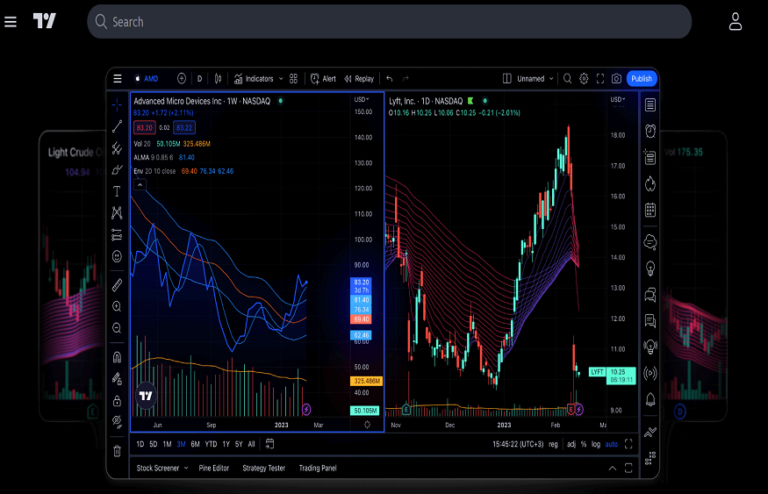
In the daily theatre of Indian equity markets, information arrives continuously from the moment the pre-dawn futures market stirs to life until the closing auction bell ends the domestic session. Among the signals that most directly shape how institutional and retail participants approach the trading day, two stand at the centre of every serious investor’s morning analysis. SGX Nifty live — the offshore Nifty futures contract whose real-time pricing reflects how market participants globally are thinking about Indian equities before domestic markets open — has been a fixture of the Indian trading morning for well over a decade. The question that this pre-market reading raises is then answered definitively when one watches Nifty today unfold on the domestic exchange — whether the morning’s global consensus holds, deepens, or is comprehensively overturned by the weight of domestic participant opinion. Understanding this dynamic as a continuous conversation between offshore expectations and domestic reality is the foundation of genuine real-time market literacy.
Why the Live Offshore Signal Matters Even After the Domestic Open
A common misconception among newer Indian investors is that the relevance of offshore Nifty futures ends the moment domestic trading begins. In reality, offshore Nifty futures continue trading during domestic market hours, and the relationship between the live offshore price and the domestic spot index throughout the session provides ongoing information about how international participants are feeling about Indian equities in real time.
When foreign portfolio investors are aggressively buying or selling during domestic hours, their activity shows up simultaneously in the domestic cash market and in the offshore futures market. Watching both in parallel allows a sophisticated participant to gauge whether the current domestic move is being driven primarily by domestic institutions, retail participants, or international money — each of which has different persistence characteristics and different implications for how far the move is likely to extend.
Read More: Activating your demat account and tracking the price of Tata Motors shares.
This real-time cross-referencing is a tool primarily used by institutional desks and sophisticated prop traders, but the underlying principle is accessible to any retail investor who understands why it matters.
The Nifty’s Relationship With Its Own Historical Ranges
Every index level at which the Nifty trades today carries meaning that can only be understood in relation to where it has traded before. Previous highs and lows — both intraday and across multiple sessions — create reference points that a large number of market participants are simultaneously watching, which makes those levels genuinely relevant to future price behaviour regardless of whether one believes in technical analysis as a predictive discipline.
When the Nifty approaches a level that has previously served as a significant resistance point — a level from which the market previously retreated — there is a natural clustering of sell orders from participants who remember that level and are using it as a reference for exiting positions. This clustering of orders creates a real gravitational pull that reinforces the level’s significance and can cause genuine hesitation in the index’s advance, even if the fundamental picture of Indian corporate earnings is entirely supportive of higher levels.
Recognising these historical reference points and understanding why they matter behaviourally rather than mystically allows an investor to interpret the Nifty’s intraday struggles and breakthroughs with far greater precision than a surface-level reading of daily percentage moves would permit.
FII and DII Data as Real-Time Intelligence
Both the NSE and BSE publish provisional data on the buying and selling activity of foreign institutional investors and domestic institutional investors at the end of each trading session. This data is widely followed and forms an important input for the following morning’s pre-market analysis.
Read More: Trading View Indicators: Enhancing Decision-Making in Share Market Trading
When foreign portfolio investors have been consistent net sellers over a sequence of sessions, it creates a headwind that the domestic market must overcome primarily through domestic institutional buying and retail participation. The sustainability of any rally in this environment depends critically on whether domestic mutual funds and insurance companies have the mandate and the corpus to absorb the foreign selling without the index declining meaningfully.
Conversely, periods of sustained foreign institutional buying tend to produce strong, broad-based advances in Indian equities — because this buying is typically accompanied by improved global risk appetite that also benefits other asset classes in which Indian companies participate in, creating a reinforcing cycle of positive momentum.
Managing Attention During High-Volatility Sessions
India’s equity markets periodically experience sessions of exceptional volatility — driven by RBI policy announcements, election results, major corporate earnings surprises, or sudden shifts in global risk sentiment. During these sessions, the volume of incoming information is dramatically higher than normal, and the temptation to react to every tick of the index is overwhelming.
This is precisely when the discipline of a pre-established framework delivers its greatest value. An investor who decided before the session opened how they would respond to various scenarios — how much drawdown they would tolerate before reviewing a position, at what index level they would consider adding exposure, what news would genuinely change their fundamental thesis versus what would merely create temporary noise — is equipped to navigate high-volatility sessions without making the kind of emotionally compromised decisions that leave lasting damage to a portfolio.
High-volatility sessions are not events to be feared. There are opportunities to be prepared for. The preparation happens in the calm of the pre-market morning, informed by live signals and structured analysis, not in the chaotic midst of a session that is moving faster than reactive thinking can follow.
The Compounding Effect of Daily Analytical Discipline
The improvement in market reading ability that comes from applying a structured analytical framework consistently over months and years is one of the most underappreciated forms of compounding available to Indian investors. Unlike financial compounding, which requires capital, this form of compounding requires only attention, honesty about past mistakes, and the willingness to refine one’s framework as new market conditions reveal its limitations.
An investor who analyses each session’s open, intraday development, and close with genuine curiosity — asking not just what happened but why it happened and what it implies for tomorrow — builds a cumulative understanding of market behaviour that no single course or book can provide. This experiential knowledge, earned through consistent engagement with real market data over real time, is the most durable competitive advantage available to any Indian market participant committed to continuous improvement.
About the Author